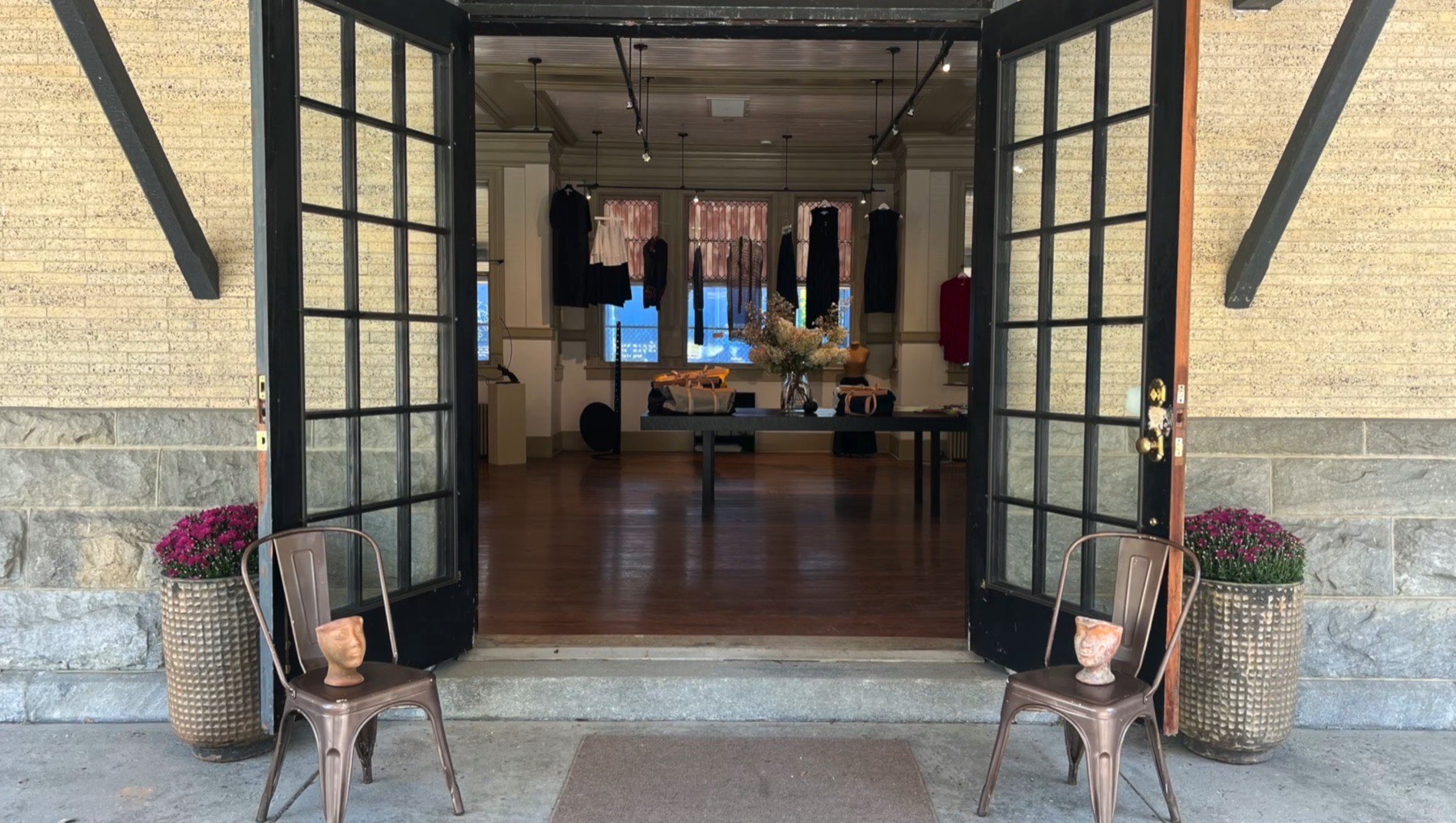
Interior gallery view with paintings, garments, and installation pieces.
Aurora Archive (s) 24 gallery view

An evolving space where things intersect.

Aurora Archive (s) is where art, photography, design, and fashion meet — exploring the tension and harmony between the old and the new, the celebrated and the overlooked.

Explore current exhibition

Fine Art

Curated works shaped around image, material, gesture, and cultural memory.

Design

Objects, interiors, and functional forms considered through archival and contemporary context.

Fashion

Garments, textiles, and personal style read through craft, history, and material presence.

Photography

Images, documents, and visual studies gathered as records of encounter and time.

Collaborations

Projects that connect art, photography, design, fashion, publishing, and archival research.

Curatorial lens

The archive is alive.

Aurora Archive (s) is an evolving space where art, photography, design, and fashion intersect. It’s a place to explore the tension and harmony between the old and the new, the celebrated and the overlooked.

My goal is to invite you into that world, not just to observe, but to walk alongside me through it. And perhaps, to walk away seeing things a little differently.

Current focus

Project and Studio Visit in Motion

Voices Across Time

Presented by Aurora Archive (s)

July 17 – October 10

The Berkshires, Massachusetts

Exhibition address

70 Railroad Street
Great Barrington, MA 01230

Opening hours

Monday
11am–6pm
Tuesday
By appointment
Wednesday
11am–6pm
Thursday
11am–6pm
Friday
11am–6pm
Saturday
11am–6pm
Sunday
12 noon–5pm
Voices Across Time exhibition invitation

Current exhibition

Voices Across Time

Voices Across Time exhibition invitation with dates, artists, location, and opening hours.

Exhibition statement

Voices Across Time brings together fourteen artists, a collective of friends bound by discipline and devotion to craft — working across fine art, photography, design, ceramics, jewelry, and textiles. Each contributor brings a distinct hand and a distinct voice, communicating through works made slowly, deliberately, and by hand: forms of expression too often overlooked in the pursuit of what is new and unfamiliar.

This exhibition is a return. In a moment defined by speed and novelty, we find ourselves drawn back to the handmade — to the object that carries the trace of the person who made it. Rare art, design, fashion, and photography are held here in perpetuity, not as static artifacts but as living conversation: skill passed from hand to hand, generation to generation, kept alive precisely because it is shared.

Voices Across Time is more than an exhibition. It is a celebration of time, voices, and objects, an invitation to see something new and recognize within it something old. A quilt on the wall is never only a quilt; it is a mother or grandmother bent over fabric, mending a shirt button, repairing a torn hem, small, repeated acts that return us to childhood, to a place both familiar and happy. Each piece in this collection asks the same of its viewer: to look, to remember, and to feel time pass through the work of the hand.

We chase the overlooked. We nurture its ongoing potential.

Studio Visits

Artist interviews and visual notes from the studio.

Carlo Mongiardo Interview

In the Studio

Carlo Mongiardo Interview

Following the Surface

Aurora had the privilege of visiting the artist Carlo Mongiardo at his studio in the Berkshires, a working space layered with plaster panels, half-finished canvases, and the quiet evidence of a process built on patience. Surrounded by his landscapes and abstracted gardens, Mongiardo works in plaster on both canvas and wood paneling, sanding and polishing each surface toward its own particular sheen. What follows is their conversation, conducted amid the work itself.

Aurora: What inspires your art?

Carlo Mongiardo: I’m quite inspired by the things around me, the scenery of the Berkshires, the plants in the garden, and the people I’m around. I also have a fascination with surface treatment.

Aurora: Can you describe your creative process?

Carlo Mongiardo: I have a few different approaches. Sometimes I have a desired look I’m trying to render, maybe a garden scene, with good reference photos, although oftentimes it depends on what I’m working on. Whether it’s wood panel or canvas, I very much like to follow the process where it takes me and treat each piece a little differently, often sanding through and polishing on panels.

Aurora: Do you start with a concept, a sketch, or a specific medium?

Carlo Mongiardo: Oftentimes I have a photo of what I’m going for, and/or I create a sketch before doing the large-scale piece, although I like to keep a working piece with fewer expectations.

Aurora: How do you overcome creative block?

Carlo Mongiardo: I find that tidying up the studio and resetting the chaos is a good way to reflect on past work and find what direction I’m heading next. Try to find something that makes you feel positive: a hike in the woods, enjoying some nature, going to see some art.

Aurora: What does creating art mean to you personally?

Carlo Mongiardo: For me, creating art is making something that people can enjoy as much as I did making the piece, in hopes that people can have a special connection and an ongoing conversation with the artwork.

Aurora: Are there particular themes or messages you aim to convey?

Carlo Mongiardo: My work is often landscape or abstracted landscape and flower work. I aim to convey a comforting feeling, as well as interest in the process behind it.

Aurora: What are you currently working on?

Carlo Mongiardo: I’m working on a series of plaster on wood panels.

Aurora: And do you plan to explore new styles or mediums going forward?

Carlo Mongiardo: Currently, I’m working in plaster in two different styles: one being plaster on canvas, the other plaster (Venetian) on wood paneling, both with quite different surface treatments. There will be more plaster sanding, polishing, and play on sheens… in my future…

Carlo Mongiardo lives and works in the Berkshires, where he makes plaster-based paintings on canvas and wood panel. His landscapes and abstracted gardens are built through layering, sanding, and polishing, a process that draws out the particular sheen of each surface. This conversation was conducted in his studio by Aurora.

Alexi Lubomirski Interview

In the Studio

Alexi Lubomirski Interview

From Fashion to Natura Sacra

For over two decades, Alexi Lubomirski has been one of fashion and portrait photography’s most recognizable names; his lens has found Julia Roberts, Angelina Jolie, Lupita Nyong’o, and the royal engagement portraits of Prince Harry and Meghan Markle. But his latest body of work, Natura Sacra: When the Earth Was God, marks a striking departure. Shot largely during time spent in the Berkshires, the project turns his eye away from red carpets and studio lights toward something smaller and stranger: wilted roses, curled leaves, dried petals reimagined as ceremonial masks and otherworldly beings. It’s a meditation on a species that has, in his words, become disconnected from nature, and an invitation to slow down and really look. We sat down with Alexi to talk about that shift, and what the Berkshires taught him that Fashion Week never could.

Aurora: What was the moment you realized the same eye that once captured a red-carpet close-up could find that same reverence in a curled, overlooked petal, and how has the quiet of the Berkshires reshaped the way you actually see now, compared to a fashion set?

Alexi Lubomirski: It started as a meditative activity at the beginning of Covid. I was always used to being able to take pictures of people, and when we were all locked away by ourselves, I started to notice how much more beautiful I found the flowers in the house once they had withered and dried. My wife would bring in roses and peonies, as well as various other flowers found in the garden, and I would watch them patiently as the water in the vase dried up and they fell into the frozen “death pose”. Once they were dried and brittle I would start to take photos of them, marveling at the frozen drama that they portrayed.

It became my happy, quiet place to hide away with these dead flowers and my Hasselblad. Then I started playing with them on Photoshop. I was strict about not wanting to manipulate or change the flowers because nature has already made them perfect. I did, however, want to hold a mirror up to them to give the viewer a fresh perspective on the intricacy and mystical beauty of each petal. I would photograph each flower from every angle, and then rotate the image, until I found a position that when mirrored, offered the most fascinating and interesting imagery within the flower’s petals.

Compared to a photo shoot on set with either celebrities or models, where one has to deal with insecurities, creative egos, marketing boundaries, and a shopping list of deliverables to get through, nature held all the answers needed within each petal. My job was simply to document the beauty there in front of me.

Aurora: In Natura Sacra, you talk about people once revering nature as a deity and now treating it like a screensaver. Fashion photography is built on spectacle and speed. Do you think the Berkshires slowed you down enough to notice what you’d been trained to swipe past?

Alexi Lubomirski: 100% accurate. After living in New York City for 15 years, where one rushes from school drop-off, to a shoot, to a meeting, to a lunch, to school pick-up, etc., all at lightning speed; up here in the Berkshires, one is forced to pause and take a breath. This is because everything is not at arm’s reach. There is no immediate gratification.

Once you adapt to the frequency up here, you realize that whereas in New York City, where five minutes of nothing is considered a waste of time (where one should be filling it with a meeting or a phone call), up here we are taught by nature that stillness has all the answers we need, and that everything arrives when it is supposed to.

Aurora: You’ve said you look for beauty in places other people don’t see. On a fashion shoot, that’s a face under studio light; in the Berkshires, it’s a dried flower on your kitchen counter. Has that shift changed what you consider a “subject” worth photographing at all?

Alexi Lubomirski: I think this is a broader conversation about photography in general. Whereas photography used to be a specialized subject where maybe 1% of the world’s population knew how to work a proper camera or understood the dynamics and complexities of dark rooms and printing, nowadays photography has become democratized, which is a great thing but that also means that the volume of imagery that we are subjected to on a daily basis has reached saturation point.

On a daily basis we are inundated with a tsunami of images through social media, magazines, billboards, TV, etc. Finding something that interests you aesthetically to document that you haven’t seen 50,000 times before is more difficult. However, that forces us to search harder and look deeper.

Aurora: Fashion photography is ultimately about aspiration, presenting an idealized version of something. Natura Sacra seems to do the opposite: it finds the sacred in what’s already dying or discarded. Do you see the Berkshires work as a correction to your fashion career, or more like the hidden thread that was underneath it all along?

Alexi Lubomirski: I don’t think anything changed in the way I look at the subject that I’m photographing. It is my job as a fashion and portrait photographer to find the beauty in all of my subjects, no matter the age, shape, skin color, or ethnicity. It just so happens that I have always found dead flowers more beautiful than freshly bloomed flowers. There is something quietly romantic about the idea that this is their final pose, their final moment, before the gentlest of touches makes them crumble.

Alexi Lubomirski is a fashion and portrait photographer whose work has appeared in Vogue, Harper’s Bazaar, and Vanity Fair, and includes the royal engagement portraits of Prince Harry and Meghan Markle. His current body of work, Natura Sacra: When the Earth Was God, was made largely at his home in the Berkshires, where dried and wilted flowers are rephotographed and mirrored into ceremonial, otherworldly forms. This conversation was conducted by Aurora.

Gigi Sharp Interview

In the Studio

Gigi Sharp Interview

Following the Form

Aurora visited ceramic artist Gigi Sharp in her Brooklyn studio, where slabs and coils of clay are rolled, pinched, and coaxed by hand into fluid, one-of-a-kind vessels. Working without a wheel, Sharp builds each piece slowly, letting texture and form emerge together. What follows is their conversation.

Aurora: Can you describe your artistic process from concept to completion?

Gigi Sharp: I hand-build all of my work using slab and coil techniques. For slab-built pieces, I roll and flatten the clay to a consistent thickness, much like pastry dough. The slabs are then cut into strips and assembled into forms. Many pieces are constructed from multiple slabs, which are carefully manipulated to achieve the shape I’m after. I create texture and refine each form by pinching, carving, and smoothing the clay by hand.

Coil building begins by rolling long coils of clay, which are then stacked and joined to build the form gradually. As each coil is added, it is blended seamlessly into the one below. Sometimes I flatten the coils or add texture before assembling them, allowing the surface treatment to become an integral part of the finished piece.

Once a piece is complete, it dries slowly for about a week before being fired twice in the kiln. The first firing, known as the bisque firing, hardens the clay and prepares it for glazing. After the glaze is applied, the piece is fired a second time, bringing out its final color, depth, and surface.

Aurora: Where do you find inspiration for your ceramic pieces?

Gigi Sharp: My work is inspired by the shapes I encounter in nature and in everyday life. Even while walking through the city, I notice forms, patterns, and unexpected details that spark new ideas. I strive to create pieces that evoke a sense of movement through their silhouettes, surfaces, and textures.

Rather than working from a fixed plan, I allow each piece to evolve as I build. I often return to forms I’ve explored before, revisiting and expanding on them in a cyclical process of discovery. Some days I begin without a clear direction and simply start working with the clay until an idea emerges.

“It often feels as though the clay itself is guiding the process.”

Gigi Sharp is a ceramic artist based in Brooklyn, NY. She hand-builds one-of-a-kind functional ceramics with organic, fluid forms, using slab and coil techniques and two firings to bring out each piece’s final color and surface. This conversation was conducted by Aurora. All works pictured are by the artist.

Aldo Rossi Interview

In the Studio

Aldo Rossi Interview

Made to Last

Aurora and Aldo Rossi go back further than this conversation. They first met years ago, in Aurora’s early days as an agent and producer at Blanpied Rubini in Paris, when she was placing photographers on set and Rossi was still working the other side of the camera. Their paths never really separated after she left agency work, and this conversation, conducted in his studio, is less an introduction than a continuation of one they’ve been having for a long time.

Aurora: What inspires your designs?

Aldo Rossi: My designs are mostly inspired by the desire for them to be long-lasting. I want them to last for generations — I want you to be able to pass a bag along to somebody else. I also want it to be strong, so that it never gives out on you, and that informs the design and some of the techniques I use. The form of anything I make follows the function — there’s nothing extra, there’s no fluff. Everything really has a reason for being there. Some of those reasons are about strength, some are functional, but very few things — besides the materials themselves — are chosen just as extras.

Aurora: What is your typical process for creating a new piece?

Aldo Rossi: Messy! I get an idea in my head and I want to make it immediately into the final product. I want it to look perfect right from the first go, so I start with the materials I think will be the final materials, expecting it to be perfect the first time around. Obviously it’s not, and it takes several rounds of edits afterward. Nothing really starts from a drawing on paper — it’s through making and editing pieces until I feel it’s as good as it can be, even knowing that other inspiration will come along later to improve the design. On the Marseille bag, for example, I had it just where I wanted it, but there was one spot at the top, where the horizontal leather straps go around the bottom of the bag, that was pushing the leather out into an ugly shape. It took me a long time to figure out how to indent that leather on the horizontal straps so they remained flush, while still being strong enough to keep the bag’s top shape.

Aurora: Where do you source your materials, and why?

Aldo Rossi: As much as possible, I try to use materials from here in the United States, both for financial reasons and because I believe we have good materials here that deserve to be used. Some of the leather comes from different parts of the world — Europe, Australia, mostly Europe. The European tanneries are still, for the most part, superior for finer leathers to what we have here, and there are importers that let leatherworkers get hold of some of the nicest European leathers. One of the purses is made from a leather called Russian leather, made at the oldest tannery in England — it’s a retro-engineered leather from the 1700s. The original method had vanished, and by lucky happenstance some of it was found and then retro-engineered. It’s completely vegetable-tan leather that takes over a year to make, and it’s a really beautiful process. I enjoy working mostly with vegetable-tan leathers, and with materials that come from other small craftspeople or smaller workshops like mine — I’ve always believed in that.

Aurora: What are your favorite materials to work with, and why?

Aldo Rossi: My favorite leather to work with is vegetable-tan leather. There are really beautiful vegetable-tan leathers, and one of their advantages is that they patina over time. I personally don’t like things that are pre-aged or pre-distressed — I like what I have to show my own story. I like to buy something new and pristine and let the years of use show through its patina.

Aurora: Are there any specific tools or techniques you find essential in your work?

Aldo Rossi: There are really beautiful tools in leatherworking — some of the most beautiful come from very traditional leatherworking places like France and England, and they’re extremely strong and beautiful, so most of the tools I use are from there. Machine-wise, an industrial sewing machine is imperative. The Marseille bags are sewn both by machine and by hand, using a traditional saddle stitch. A saddle stitch has two advantages: one, it’s an extremely strong stitch, where a single thread has a needle at each end, and each end is put through every hole, forming a figure eight at each stitch — this means the stitch can be cut at any point along it and it won’t unravel. The other advantage is that a hand saddle stitch is very beautiful from both the front and the back, whereas a machine stitch, which unravels easily if cut, is only really beautiful from one side.

Aurora: How do you maintain consistency in quality across your handmade pieces?

Aldo Rossi: The consistency in quality, especially with handmade goods, mostly comes from a very strict adherence to not cutting any corners, and to fixing mistakes when they happen — and they happen fairly often, a lot of them in the hide itself. It’s more a matter of staying very strict to the principle of going back and fixing those mistakes. One single stitch that’s slightly askew, or done backward, or where one thread went over the other instead of under, means the visual flow of the whole piece can be compromised — and sometimes you don’t see it until ten, twenty, or thirty stitches later. Consistency of quality means you have to go back and undo those twenty or thirty stitches just to correct that one small mistake. Another important aspect of quality is not cutting corners on materials — not choosing lesser leathers or lesser fabrics just to save a buck.

Aurora: Can you describe a challenge you faced in quality control and how you overcame it?

Aldo Rossi: Some small, seemingly obvious design choices actually come as the result of trying to fix a quality issue. On the Marseille bag, for example, it’s important to me that the bottom of the bag be one solid piece, so that rubbing against the ground doesn’t fray the fabric or the materials so much that it creates rips, or the bag is no longer waterproof, or the strap doesn’t hold. Originally, the vertical straps that go around the bottom of the bag went around the outside of the canvas and the outside of the leather, which meant that as straps, they were the first thing to touch the ground — rubbing against it constantly and potentially getting snagged, ripped, or torn. My first idea was to stitch the suede bottom piece, stop the stitch, let the straps go free, and then pick that stitch back up again — I wanted the straps to be free-flowing, able to hook a surfboard, a boogie board, or a roll of canvas, so I didn’t want them stitched into the side of the bag. But ultimately that solution led to the idea that the suede could be pulled away from the bag entirely. It took a long time to figure out how to put slits into the suede so the straps could tuck into it, slide around the bottom, and come up the other side. Now the straps are protected by the suede, which is extremely scratch-resistant, puncture-proof, and waterproof, so they’re as protected as the bottom of the bag, while still remaining free-flowing enough that anything can be tucked into them.

Aurora: What do you enjoy most about being a designer?

Aldo Rossi: I don’t really think of myself as a designer, per se. I realize I have to design, but as I said, my process is really trial and error rather than conceptual or written down on paper. In the whole process of being a designer and a brand founder — and really operator, for the time being — I have to have my hands in everything, from making the pieces to thinking them up, to getting them out into the marketplace and presenting them to people I hope will appreciate them and support the brand.

Aurora: What advice would you give to aspiring designers in the handmade accessories field?

Aldo Rossi: I’ve actually had this conversation recently with the kids of some friends of mine who are finishing high school and about to start college in creative fields. As I was coming up, a lot of our inspiration came through experience — through museums, through books — but even with a lot of museums, books, and exhibitions, it’s still a fairly finite collection of inspiration to draw from. I was saying to these kids, who want to go into creative fields, that their new competition isn’t necessarily other designers — it’s the whole of AI, which is effectively the whole of human knowledge, everything that’s ever been created, everything that’s ever been done. It will be difficult to stand out in that context. So my advice to them is to make sure they’re doing something they absolutely love — that they’re doing it for themselves, and that every single creative decision, every design decision, is one they can stand behind and justify, one that’s pleasing to them. I don’t think it’ll be pleasing to other people if it’s not pleasing to them first, and they won’t have a heartfelt love for what they’ve made otherwise.

Aurora: How has your background in fashion photography influenced your approach to accessory design?

Aldo Rossi: There are a couple of ways my background in fashion photography influenced how I work now — not necessarily the actual taking of pictures, but during the years I was a fashion photographer, I had the opportunity to meet several great designers and watch them work — including the likes of Alaïa, who would sit in his studio until very late, three or four in the morning, hand-sewing garments on models. Watching somebody like him, who knew his craft at the deepest level and created techniques by hand, was very important to me — it taught me that I have to know how to make what I’m making. I have to learn whatever needs to be learned, invent whatever needs to be invented, or incorporate whatever techniques need to be incorporated. Secondly, fashion photographers — especially at the time I did it, mostly before digital photography — used to carry around a lot of really heavy equipment, and we traveled a lot. It gave me a very strong appreciation for things that were well-made, sturdy, and could hold up over time. We traveled with boxes of photographs, prints, contact sheets, and film — all of this stuff meant that whatever contained it, and that we carried through airports, on buses, in and out of cars and taxis, had to be rugged, and of course we wanted it to be stylish too. That informs my brand a lot — I want the things I make to last through time.

Aurora: Are there specific techniques from photography that you apply in your design work?

Aldo Rossi: One of the main carryovers from photography to making things is the ability to look again at one’s own mistakes. When you’re photographing, you have an idea in your head of what you want the outcome to be, but often something happens — one or two frames out of a series of twenty, thirty, or a hundred — somebody was walking by, somebody blinked, the thing they were holding fell, there was a blur — and even though that image doesn’t correspond exactly to the image you had in your head, oftentimes that proves to be the best picture. It’s the same with making things — mistakes happen, and rather than just throwing that thing away and never looking at it again, it’s important to take a second look. Maybe something bigger than yourself was at work that made that mistake happen. I can give a concrete example: the blue ticking fabric on the Marseille bag. When I first used it, my plan was to use it right side out, so it would be a really dark blue against the canvas as the lining. The first time I used it, I installed the pocket backward. Rather than cut away everything I’d done and start over, I took a second look — and noticed that the backside of the ticking fabric was a softer blue that actually worked better with the canvas. The blue looked more washed out and flowed better with the canvas, especially the brighter colored canvases. That’s just one example of taking a second look at what started as a mistake and ended up looking better.

“Something bigger than yourself is sometimes at work when a mistake happens — it’s worth a second look before you throw it away.”

Aldo Rossi is a leatherworker and bag designer, formerly a fashion photographer, working from a studio where each piece is built, edited, and hand-sewn — often with a traditional saddle stitch — in vegetable-tanned leather and heavyweight canvas. This conversation was conducted by Aurora. All works pictured are by the designer.

Collector services

Services

In-Home Styling & Placement Advice

Thoughtful placement guidance, in your space.

Professional Installation, On Request

Hands-on hanging and mounting, whenever you need it.

White-Glove Delivery

Secure, discreet, and handled with the utmost care.

Services available at an additional cost.

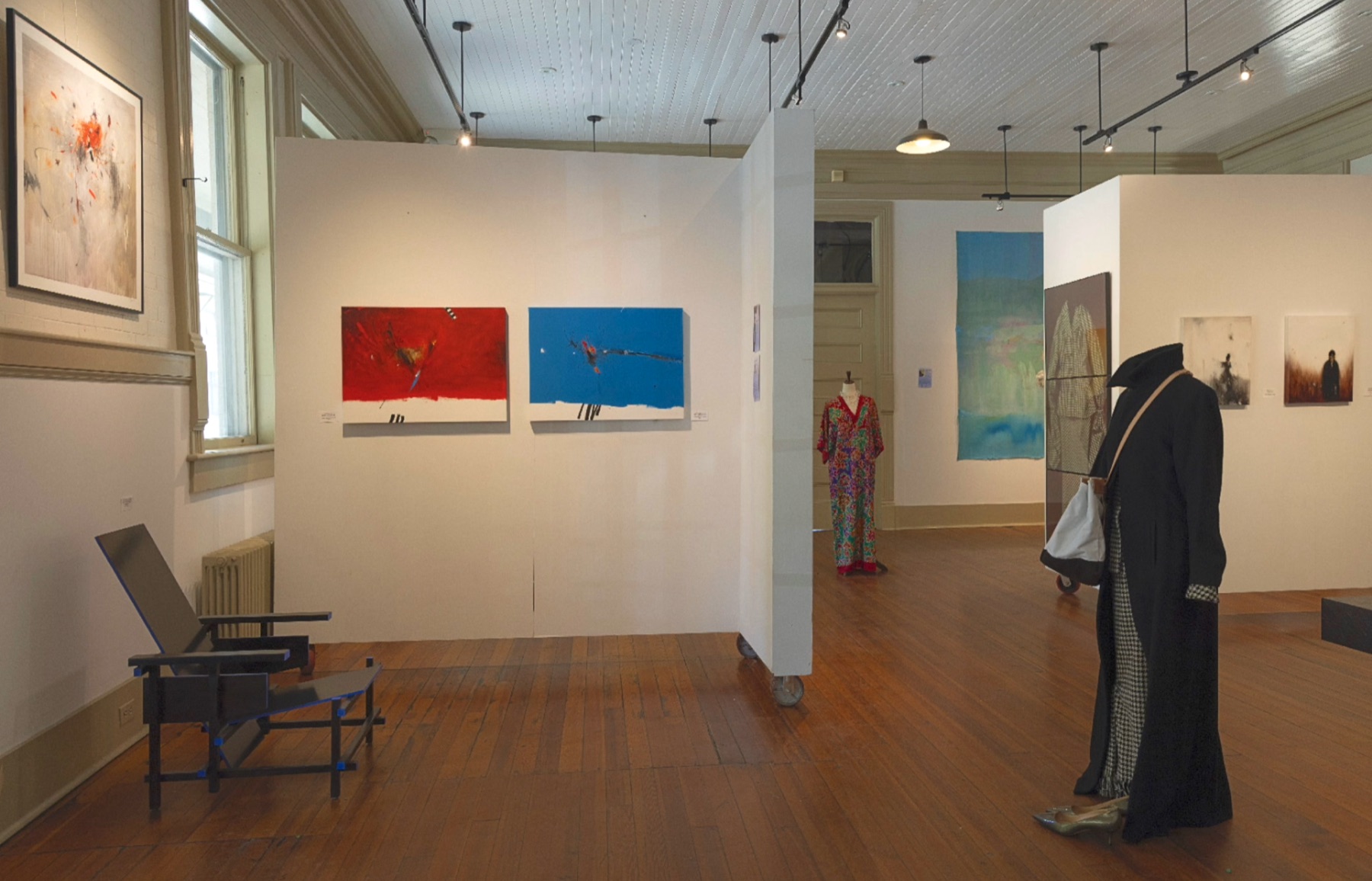
Full width entrance view into the Time & Timeless exhibition.
Time & Timeless / exhibition view

About

A life shaped by art, history, and visual culture.

Aurora was born in London to West Indian parents. She spent her childhood immersed in museums like the Victoria and Albert Museum and Tate Britain, early experiences that shaped her deep appreciation for art, history, and visual culture.

She holds a BA (Hons) in the History of Art and Architecture and a Master’s degree in the same field. Over the past 20 years, she has worked as a Production Director across art, design, and fashion, in advertising, bringing a refined curatorial eye to every project.

Her international journey has taken her from Milan and Paris to New York City. She currently lives in Brooklyn, New York. Her early career included a time at Liberty of London, where she developed a discerning sensibility for luxury and craftsmanship while working with brands such as Dries van Noten, Yohji Yamamoto, Junya Watanabe, Martin Margiela, Ann Demeulemeester, and Comme des Garçons. She also worked at the National Portrait Gallery in London as a postgraduate, and later served as Press Officer and Archivist for renowned architect Dame Zaha Hadid.

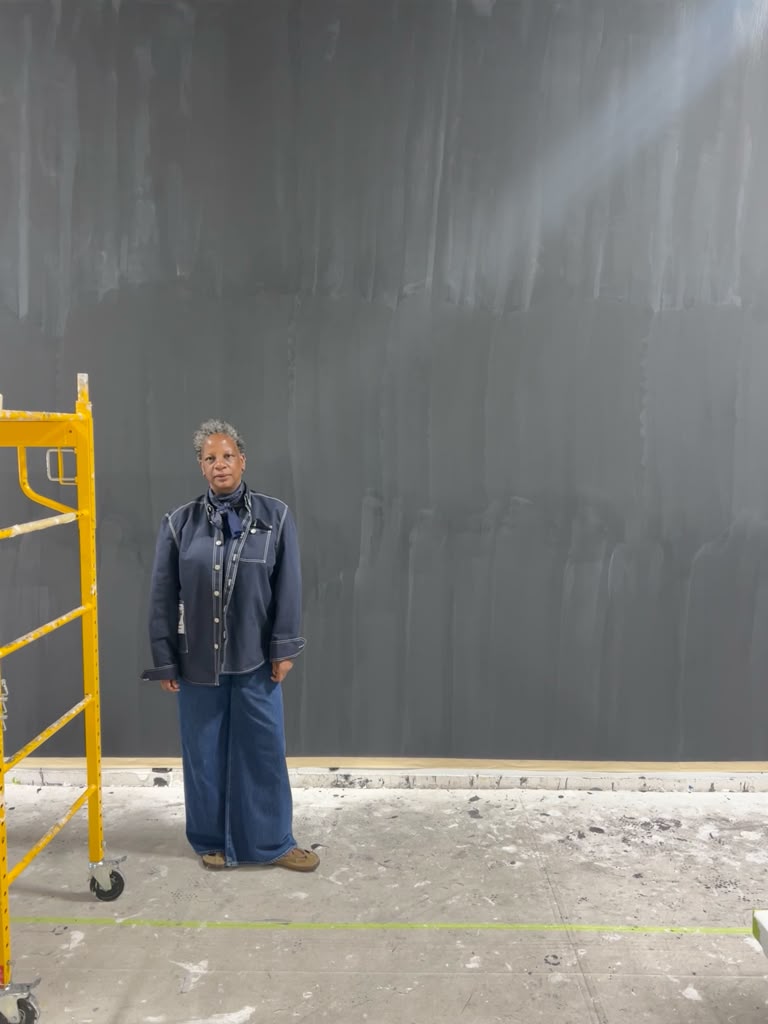
Samantha Dalmas standing in front of a charcoal-painted wall in a gallery installation space.

The founder

Samantha Dalmas

Founder of Aurora Archive (s)

The founder behind Aurora Archive (s) sits down with host Ian Jarvis to talk London, Paris, and New York; a formative stretch working for Zaha Hadid; and why her Great Barrington gallery was built to feel less like a gallery and more like a cup of tea with an old friend.

“Come in for a cup of tea and a chat. You don’t have to buy anything. My chair is always open.”

Giving You the Business — Radio Interview

A Conversation with Aurora

A conversation

The founder behind Aurora Archive (s) sits down with host Ian Jarvis to talk London, Paris, and New York; a formative stretch working for Zaha Hadid; and why her Great Barrington gallery was built to feel less like a gallery and more like a cup of tea with an old friend.

Ian met Aurora the way most good stories start in a small town — by accident, on the street outside his studio. She’d overheard his broadcast, asked a question, and a conversation was born. Weeks later, she sat down across from him to talk about the pinball-machine logic of a career, the accent that gives away three cities’ worth of history, and the concept store she calls Aurora Archive (s).

Origins and the art world

Ian Jarvis: Based on your accent, I imagine you’re from the UK.

Aurora: Originally, yes — London. From there I moved to Paris, and from Paris to New York, where I’ve now been for close to twenty years. It’s always a bit frightening to say that out loud.

I lived in the 18th arrondissement in Paris. My parents are from the Caribbean — they emigrated to London in the early sixties, part of that huge wave of Caribbean migration at the time. I speak English, French, and Italian.

Ian Jarvis: So you’ve been in the art world for the whole time you’ve been in New York?

Aurora: Going way back — I studied History of Art and Architecture at Manchester University. My dream was always to be part of the art scene, to work in a gallery, to do all of those wonderful things. I worked for the National Portrait Gallery in the photography department during my postgraduate studies. And after that, I went to work for the architect Zaha Hadid, as her press officer and archivist.

She was a phenomenal individual — an absolute genius, known for work spanning LFI to the Vitra Fire Station. Most architects put their own name on a project even if they only touched it at the very beginning. But Zaha made sure the people below her had their name on the work too, because she knew how important that was. She was a woman coming up in an industry where women simply weren’t given that level of standing. She broke barriers, and that’s part of what let the architects who came after her — many of them women — really thrive.

It goes back to the way I do business today, and have throughout my career. I’m very attached to the underdog. Somebody is always coming up behind us, and if we don’t give them the experience, nothing progresses — everything stays stagnant. At my base, I’m a producer. And like most things in my life, that happened by accident. Everything happens by accident, but it’s not really an accident in the end — it’s meant to be. That’s why it’s important to me to give back to the people who come after: the photographers, the directors, the artists. Everybody has a voice, and everybody deserves to be heard, whether or not you like what they’re producing.

“With Zaha, she allowed her team to lead and to take the credit. That’s ultimate respect from somebody who is an absolute genius.”

The concept

Ian Jarvis: Tell me about Aurora Archive (s).

Aurora: It’s something I’ve always wanted to do — mount a gallery, but not in the traditional sense. Not the kind where you walk in and it’s dark, and there’s someone sitting by a computer who barely looks at you, and you feel intimidated and just want to leave. I think the modern gallery has to change, because people are threatened by that starkness.

I also have a fashion background, very heavily. So I asked myself: how do I bring fashion and art together? I’ve traveled a lot, seen a lot of retail stores, and I wanted to develop something closer to a concept store — not just art, but fashion, jewelry, ceramics, all these different entry points. Someone might walk in because they saw a scarf in the window, or on the pretext of the scarf, when really they wanted to see the painting all along. It relaxes everybody.

So when someone walks in, it’s basic retail warmth. Not “Can I help you?” — more like, “Hi, I’m Sam. This is who I am, it’s all printed here, I can save you a little time — read about the exhibition, there’s a bit about me, I can already tell you I’m wonderful, and if you have questions, I’m right over here.” Then everybody warms up. I offer a cup of tea, a biscuit, a chat.

Every artist I represent — I’ve known them for fifteen to twenty years. This isn’t a random group of individuals I brought together; it’s a real collective. When I came to them with the idea, they said, “This sounds great, we’d love to help you, we’d love to work alongside you.” It’s all about collaboration. I showed everyone a creative deck, and everybody gave their feedback, so the deck really became us. I’m not the deck — we are the deck. And because I know each of these artists so well, I can talk about their work fluently, because art is somebody’s soul. Whatever the medium, that’s what you’re seeing depicted.

“Art connects to a person. It connects to a feeling. If the feeling’s off, I’m not going to sell that piece — because I’m selling somebody’s soul.”

Why Great Barrington

Ian Jarvis: You told me the first time we met that you were doing this for three months, just to see how it goes.

Aurora: When I started the first iteration of Aurora Archive (s), it was called Time. I framed it as a happening, which slightly confused people — very European concept. So I called it a pop-up instead, something people could get their hands around. Though even that’s not quite right — a pop-up implies you’re there to sell something, and this isn’t solely about that. If you want to come in and sit in this chair and have a cup of tea and talk about your life, that’s just as much the point.

I’m not from the Berkshires. I’m not from Massachusetts — I’m from New York, from Brooklyn. People always ask why not do it there instead. It comes back to community. I’ve been coming to the Berkshires since around 2008, and there’s a real sense of community here — the other mothers at ski pickup, all these people who’ve contributed to the gallery we’ve built together. There’s something special about people here: they welcome you with warmth and trust, and more than that, they want you to succeed. Now people recognize me on the street — “Aurora, you were at the train station last year, and now you’re here” — and even on Instagram, people ask where I’ll pop up next.

“Come in for a cup of tea and a chat. You don’t have to buy anything. My chair is always open.”

The Archive (s) Letter

Rare art, design, fashion, and photography, held in perpetuity through exhibition notes, references, and ongoing observations.

The Archive (s) Letter